
Photo taken by the author in the bush near Zomba, Malawi.
This is post is Part Two of a series. Swing by next week to read the next installment!
Art Alike Artist
A few years ago, I was at my parents’ house, needing some inspiration for writing. Okay, I was probably procrastinating from writing. Either way, I found myself digging around the enormous bookshelf my Dad had built, looking for something to tickle my mental taste buds. I found a fragile little book with a green cloth cover, its gold title worn off with age. Upon opening the front page, I discovered that the book was a collection of poems called Palgrave’s Golden Treasury, the first edition having been published in 1917.
I was thrilled. I have always loved antique books. Over the next hour, I flipped through the brittle brown pages, copying down my favorite poems. One of particular delight to me was “Love’s Philosophy” by Percy Bysshe Shelly. It reads like a typical romantic poem, full of descriptive language and metaphor, but I noticed hidden marks of the Great Artist:
The fountains mingle with the river
And the rivers with the ocean,
The winds of heaven mix forever
With a sweet emotion;
Nothing in the world is single;
All things by a law divine
In one spirit meet and mingle.
Why not I with thine?—
See the mountains kiss high heaven
And the waves clasp one another;
No sister-flower would be forgiven
If it disdained its brother;
And the sunlight clasps the earth
And the moonbeams kiss the sea:
What is all this sweet work worth
If thou kiss not me?
“All things by a law divine / In one spirit meet and mingle. ..” In the entirety of this poem, this phrase is the most mentioned of God. Yet, without saying it very directly, I believe this piece of poetry glorifies God in every line. We see the artistic touch of the Designer in fountains mingling with rivers. Moonlight kissing the heavens. Sunlight clasping earth. The glory of the Artist is reflected in His masterpiece.
God could have created the universe- shaping each planet, atom, creature, organism, and mineral- and then left it at that. He could have finished His work of art, called it “good,” rested (Genesis 1:31-2:3), and enjoyed it all by Himself.
But He didn’t. It seems that God wanted to share His artwork with another being who could appreciate it… another being like Himself.
Now, as the Triune, three-persons-in-one Deity, God could experience relationship or community in a sense with Himself. But let’s not get too deep into that debate- and instead, look at it from the perspective of a child:
If you make something, you love to have people enjoy it with you. whether it’s a meticulously organized spreadsheet or a watercolor portrait of your Grandma’s dog. You can take pride in what you made on your own, but you can relish it with another person.
Genesis 1, beginning in verse 26 (right after God finishes creating the land creatures):
Then God said, “Let us make man in our image, after our likeness. And let them have dominion over the fish of the sea and over the birds of the heavens and over the livestock and over all the earth and over every creeping thing that creeps on the earth.”
So God created man in his own image,

in the image of God he created him;

male and female he created them.
(ESV)
Notice the phrase “created man in his own image”. If you attend church often, this set of words may sound a little vapid, simply bouncing out of your ears. But don’t skip over this just yet. This is a very important moment in Scripture. We, human beings, male and female, are created in the same likeness as the Creator God. He made a bunch of “mini-me”s, essentially. That in itself fills me with wonder. God made us to be like Him!
Have you ever wondered why? Why did God create us? Why did He create us to be like Him? That’s a bigger question than I can answer neatly in a blog post, but for our purpose here, this is my three-word summary:
To enjoy Him. Yes, there is our purpose, that is why He created us: to be able to enjoy Him, learn about Him, and get to know Him deeply1. In the same way that we love to share our work with each other, God has given us His creation to explore and traverse so that we may get to know Him better (See Romans 1:20). God could’ve enjoyed what He created as the Godhead without us- but He wanted to share it with another being like Himself. A being with the capacity to create, enjoy, and relish in the beauty of what is created, just like He can.
Primarily Lovely
Have you ever looked at an especially vibrant flower and thought, “That flower may be pretty, but it’s taking up valuable space on a planet already overcrowded by weeds and invasive plants. It should be pulled out and replaced with something more useful.”
Or maybe you are around people a lot, and have seen an especially attractive man or woman and thought, “What a waste to have such a lovely face! I am sure the energy and nutrients that were required to create that person could’ve been used for a more practical purpose, like making them stronger or smarter or a more efficient worker.”
That’s ridiculous, isn’t it? What sort of world would it be if everything in it was purely functional and necessary? A tasteless world. A world missing delight and enjoyment.
Yet we know that God created us for delight, both in Him and what He has made, and the things we delight in are beautiful. That is what beauty does: it draws us into delight.
Why did God make daffodils, hummingbirds, snowflakes, lichen, ants, minnows, musical birds, squirrels, or trickling creeks…. Or anything else that we find delightful yet “not essential”? Because God loves beauty. He loves delightfully lovely things, things that spark wonder and awe. Beauty in the world is not simply a frivolous add-on: beautiful things reflect God’s glory and mastery as an artist of all Creation. The author couple John and Stasi Eldredge wrote about this in their book Captivating: Unveiling the Mystery of a Woman’s Soul (I mentioned them in the introduction post of this series, here). 2
Aside from a few personal matters, this book revealed to me the importance of beauty- not only for women but all of creation and the world. In Chapter 2 of Captivating, the Eldredges write:
“Nature is not primarily functional. It is primarily beautiful. Stop for a moment and think about it. We’re so used to evaluating everything (and everyone) by their usefulness that this thought will take a minute or two to dawn on us. … Beauty is in and of itself a great and glorious good, something we need in large and daily doses (for our God has seen fit to arrange for this). Nature at the height of its glory shouts, Beauty is Essential! revealing that Beauty is the essence of God. The whole world is full of his glory.”3
Right before this paragraph in the book, John Eldredge references Isaiah 6:3, saying “The created world is filled with the glory of God”. Let’s take a peek at this passage in the Old Testament ourselves, starting in the first verse of the chapter. For context, this is the author, the prophet Isaiah, speaking:
“In the year that King Uzziah died I saw the Lord sitting upon a throne, high and lifted up; and the train of his robe filled the temple. Above him stood the seraphim. Each had six wings: with two he covered his face, and with two he covered his feet, and with two he flew. And one called to another and said:
“Holy, holy, holy is the Lord of hosts;
the whole earth is full of his glory!”
And the foundations of the thresholds shook at the voice of him who called, and the house was filled with smoke. And I said: “Woe is me! For I am lost; for I am a man of unclean lips, and I dwell in the midst of a people of unclean lips; for my eyes have seen the King, the Lord of hosts!”
Okay, if that didn’t BLOW YOUR MIND, I’m not sure what will. I think we tend to gloss over the wonder of these moments in Scripture. I know I certainly do. I’d like you to read that again, slower, and try to place yourself where Isaiah was. Try not to think of only words- think of images.
We just saw (in our mind’s incapable, small imaginations) the throne of God Almighty. The guards around His throne, whose glory and awesomeness alone would make us fall down in fear and awe, have voices so powerful that, when they speak, the foundations of the place are shaken violently. No wonder that Isaiah would cry out in a feeling of unworthiness and fear! The majesty he witnessed would cower the greatest earthly king.
There is a beauty in this passage in Isaiah- but it is a powerful kind. The kind that fills us with reverence, a sort of “holy fear”. God is a powerful being- the most powerful. The mere sight of His glory would cause our mortal bodies to perish (see Exodus 33:20-23, 1 Timothy 6:16).
God is not only powerful and mighty- He is also the gentle, comforting Father, the wooing, whispering Lover of our souls. Beauty is both of these: at times dangerous, at times comforting. God infused these qualities into the beauty He created. He shows us that His omnipotence is glorious and His kindness is devoted.
Song of Songs (or Song of Solomon), the book directly before Isaiah, is sometimes interpreted by Bible scholars as an allegory of Christ and the Church, but I disagree with the assessment that this is the only meaning of the book. Just read Song of Songs once. It’s rather… scandalous. But it’s in the Bible! It’s God’s Word! Surely, if we learn anything from this beautifully romantic poetry in Scripture, it is that God is a lover of love. He is a lover of romance, of the alluring:
“Set me as a seal upon your heart,
as a seal upon your arm,
for love is strong as death,
jealousy is fierce as the grave.
Its flashes are flashes of fire,
the very flame of the Lord.
Many waters cannot quench love,
neither can floods drown it...”
- Song of Solomon 8:6-7
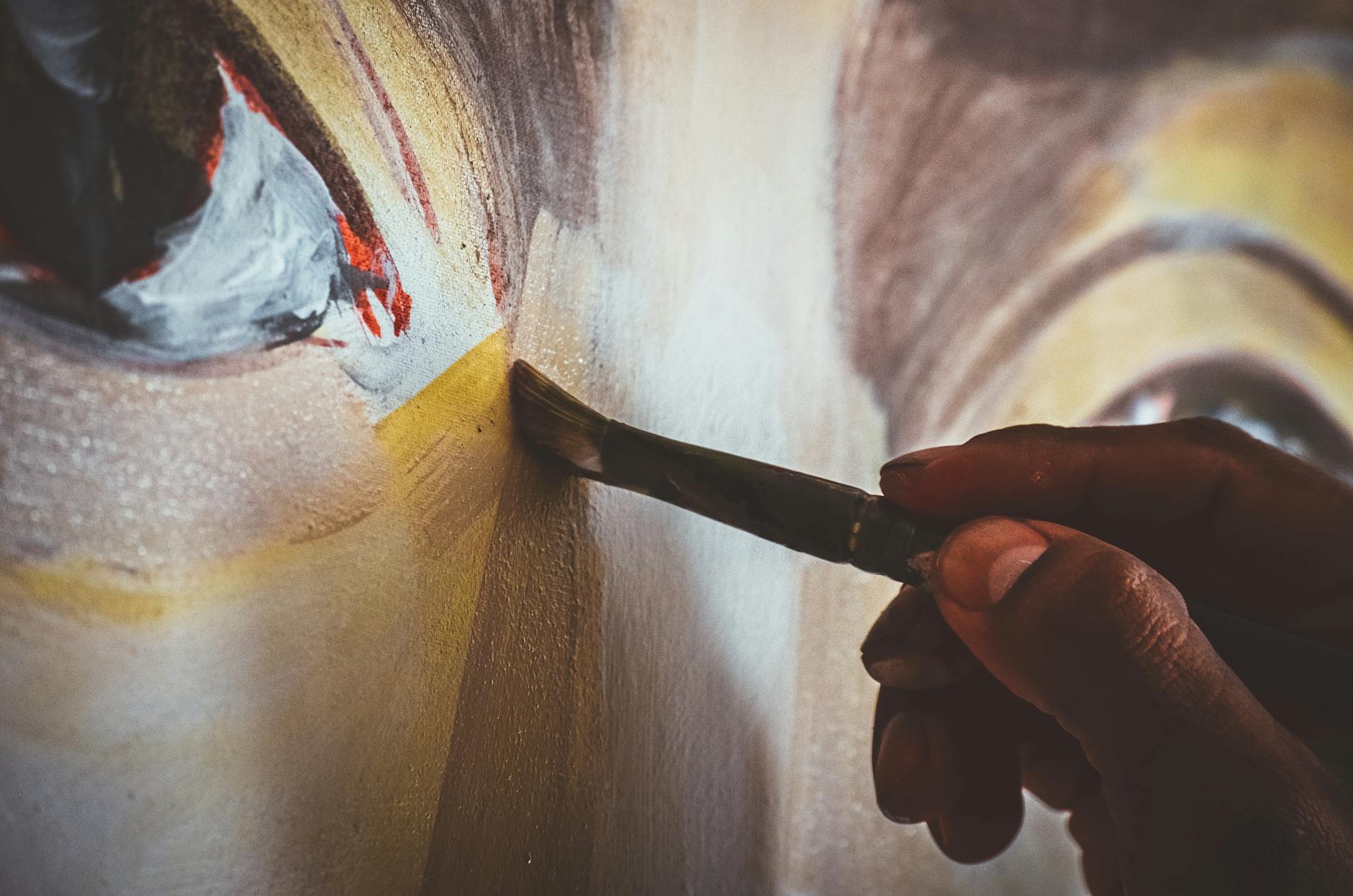
The Bible, God’s Word, is filled with beautiful descriptions, stories, and people. From the creation account in Genesis to the love story of Boaz and Ruth, to the descriptions of God in Isaiah, Revelation, Daniel (and others), we see that the Almighty, Loving God we serve loves beautiful things. He has given us His gift of creating beauty, whether in the form of poetry, or another medium, and it is with this artistry that we can glorify Him.
With the variety in art, it seems God did not want to limit the opportunities for beauty to only a few. God is so vast, it will take us an eternity to get to know Him. The glory and variety, the complex intricacy we see on our planet, or in the solar system- even in our own bodies! It all reflects Him who created it.
God Himself is very beautiful. The masterpiece reflects the Master. No wonder He has designed the universe with such glorious loveliness!
The heavens declare the glory of God,
Psalm 19:1
and the sky above proclaims his handiwork.

A quick note:
First off, thank you reader for being here. It is so exciting to have someone read the beginnings of my blog!
… but I need some help. Would you leave a comment on what you thought about this article? I’d love to know your thoughts about the length, readability, and in general, what you thought worked- and didn’t. I have plans to turn this blog series into something bigger, and I need your feedback to make that happen. Thanks in advance! : )
~Allison
Footnotes
- “What Does It Mean to Have a Personal Relationship with God.” GotQuestions.org. https://www.gotquestions.org/personal-relationship-with-God.html
↩︎ - I am not often one to fully endorse any one book (besides the Bible, of course)- and though there are certainly a few minor theological points I could contest, this book is incredible. It changed my life, in that it changed the way I look at God and myself. Don’t take it as capital-T Truth any more than any other book, but I encourage you to find the gold nuggets in it for yourself!- Allison
↩︎ - Eldredge, John and Stasi. Captivating: Unveiling the Mystery of a Woman’s Soul. Nelson Books, 2005. ↩︎
- Photo by Lean Leta on Pexels.com ↩︎









Leave a Reply